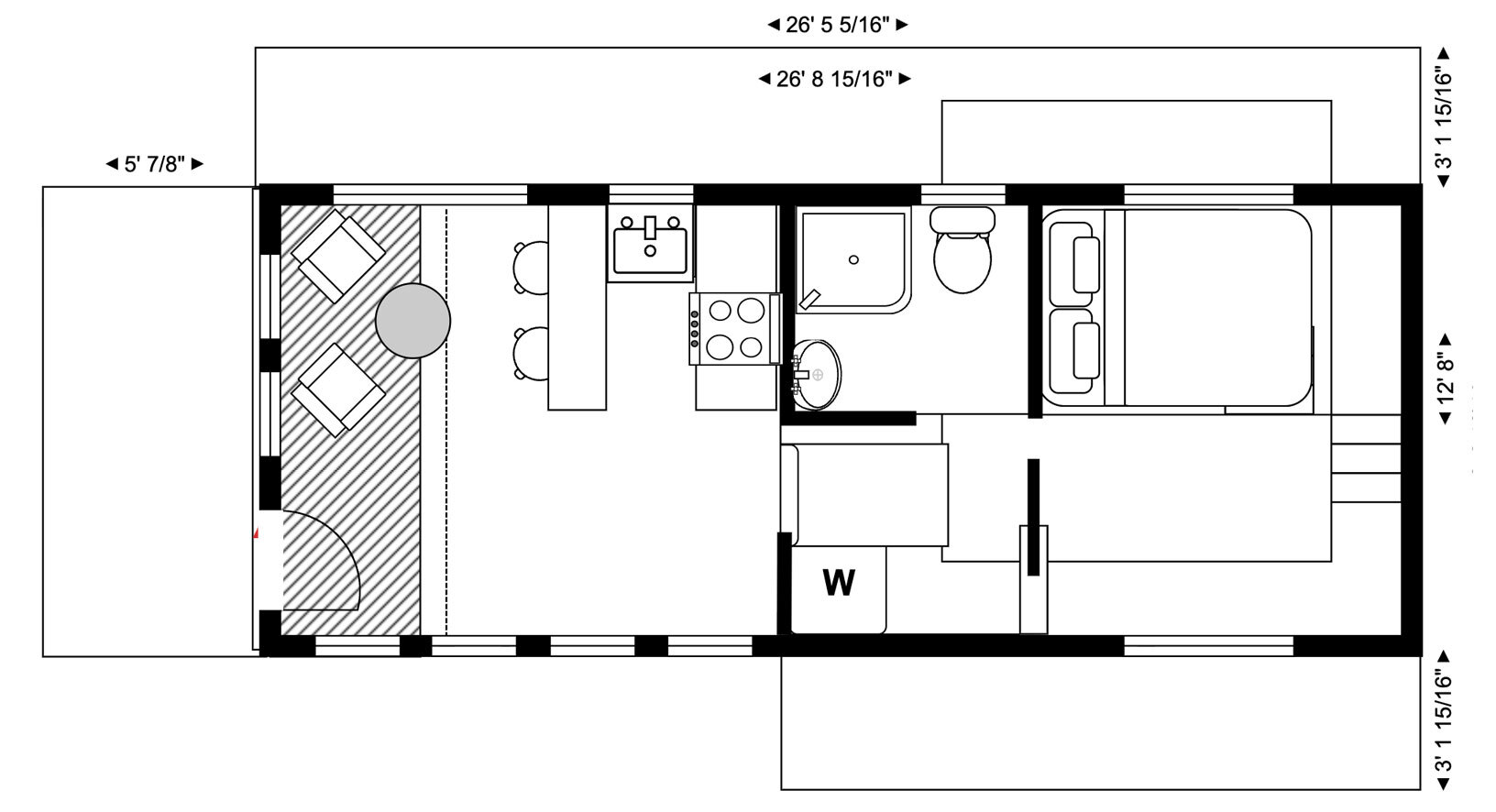
Tiny homes appeal to homeowners, renters, and even investors looking for a simpler, more efficient way to live. People are drawn to tiny homes because they offer not jst a smaller footprint, but also a preferred lifestyle:
- Lower costs compared to traditional homes
- Less maintenance and fewer things to manage
- Less clutter
- More flexibility with modular designs
- Smaller environmental footprint

One of the biggest drivers behind the tiny home movement is financial freedom. Tiny homes cost less to buy and maintain.
- Lower or no mortgage
- Reduced utility bills with less space to heat, cool, and light
- Less spending on "stuff" like furniture
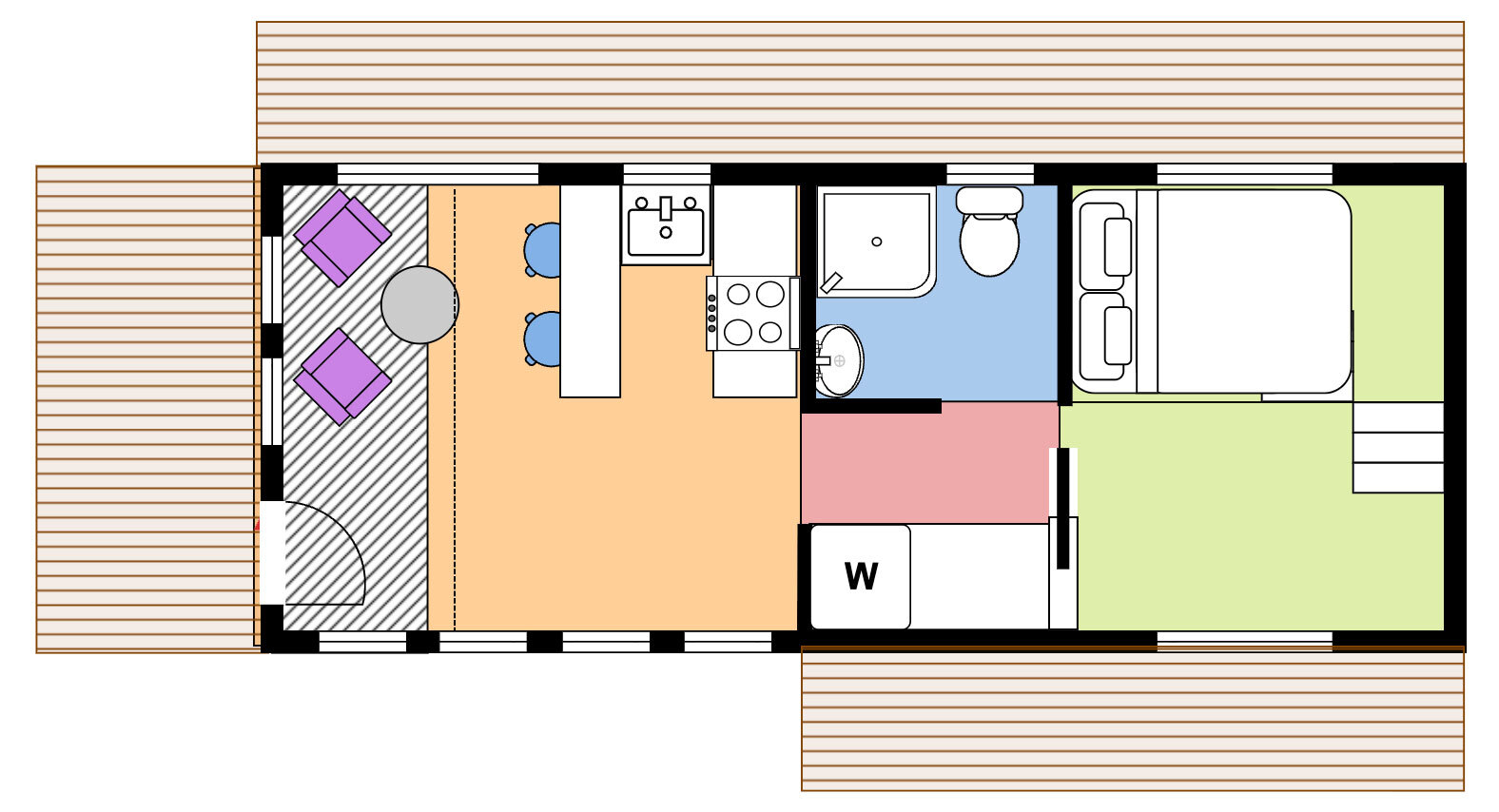
A good layout will make a small space seem twice as big by making the space feel open and livable.
Focus on:
- Clear walking paths
- Multi-use zones
- Open sight lines
- Minimal barriers
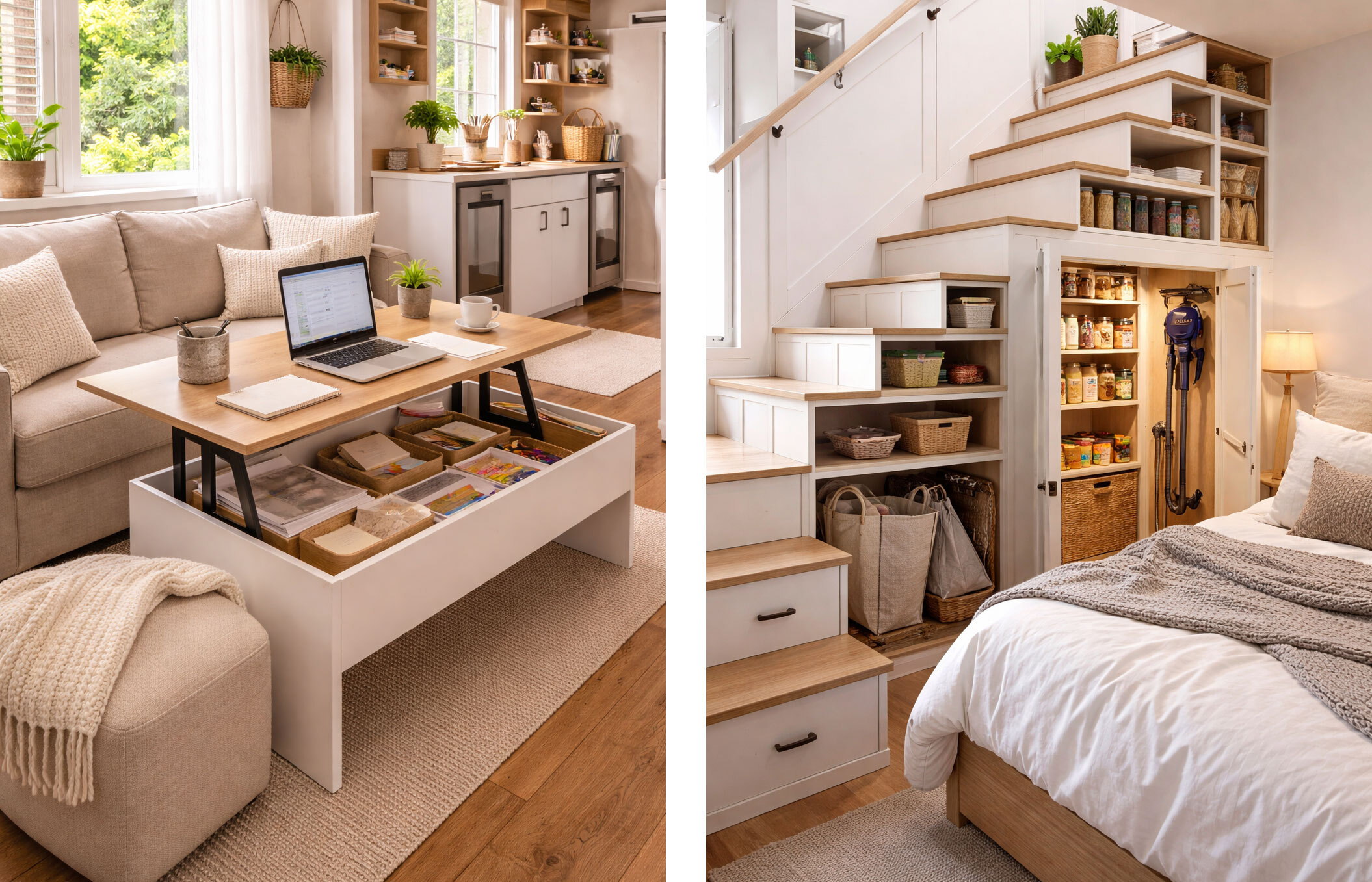
In a tiny home, every furniture piece should do more than one job if possible to maximize space. Pieces that transform or fold away can also help a small space feel more spacious.
Design:
- A sofa that converts into a bed
- A table that doubles as a workspace or dining area
- Stairs that have built-in storage drawers
Also consider adding furniture that can fold away like desks and Murphy beds.
Making full use of any available height can add a lot of functionality to a small space. Going vertical effectively creates layers in your space, making it feel larger and more dynamic.
Think about:
- Lofted sleeping areas can keep the main floor free
- Wall-mounted storage keeps surfaces clear
- Tall shelving can maximize storage
- Hanging solutions for kitchens and closets
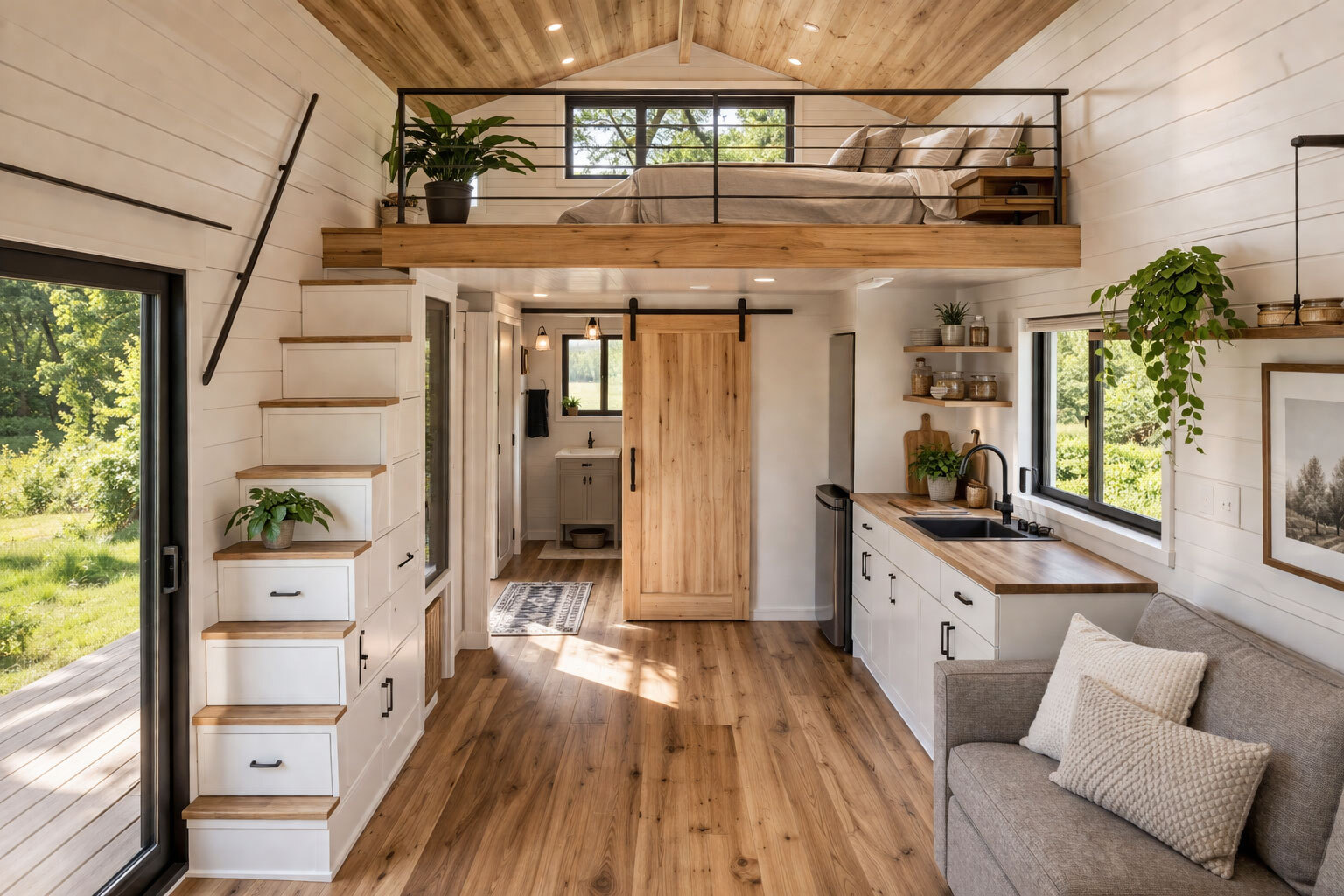
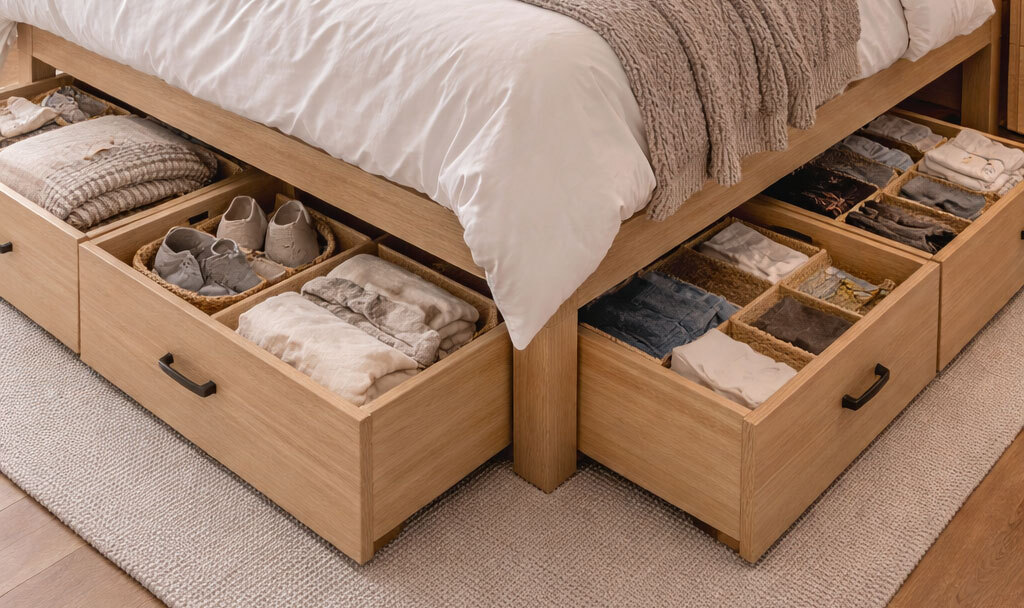
Clutter is the fastest way to make a tiny home feel smaller than it is. The goal is simple: everything should have a place, and that place should be easy to access.
Plan for:
- Hidden storage under beds and benches
- Built-ins instead of standalone furniture
- Slim, efficient cabinetry
- Hooks, racks, and wall storage
You can use light to create the illusion of space. Natural light and bright spaces will feel bigger. Even a small home can feel open and airy with the right approach.
Use:
- Large windows to bring in natural light
- Glass doors to visually extended the space
- Light color palettes that reflect rather than absorb light
- Minimal window coverings to avoid blocking brightness
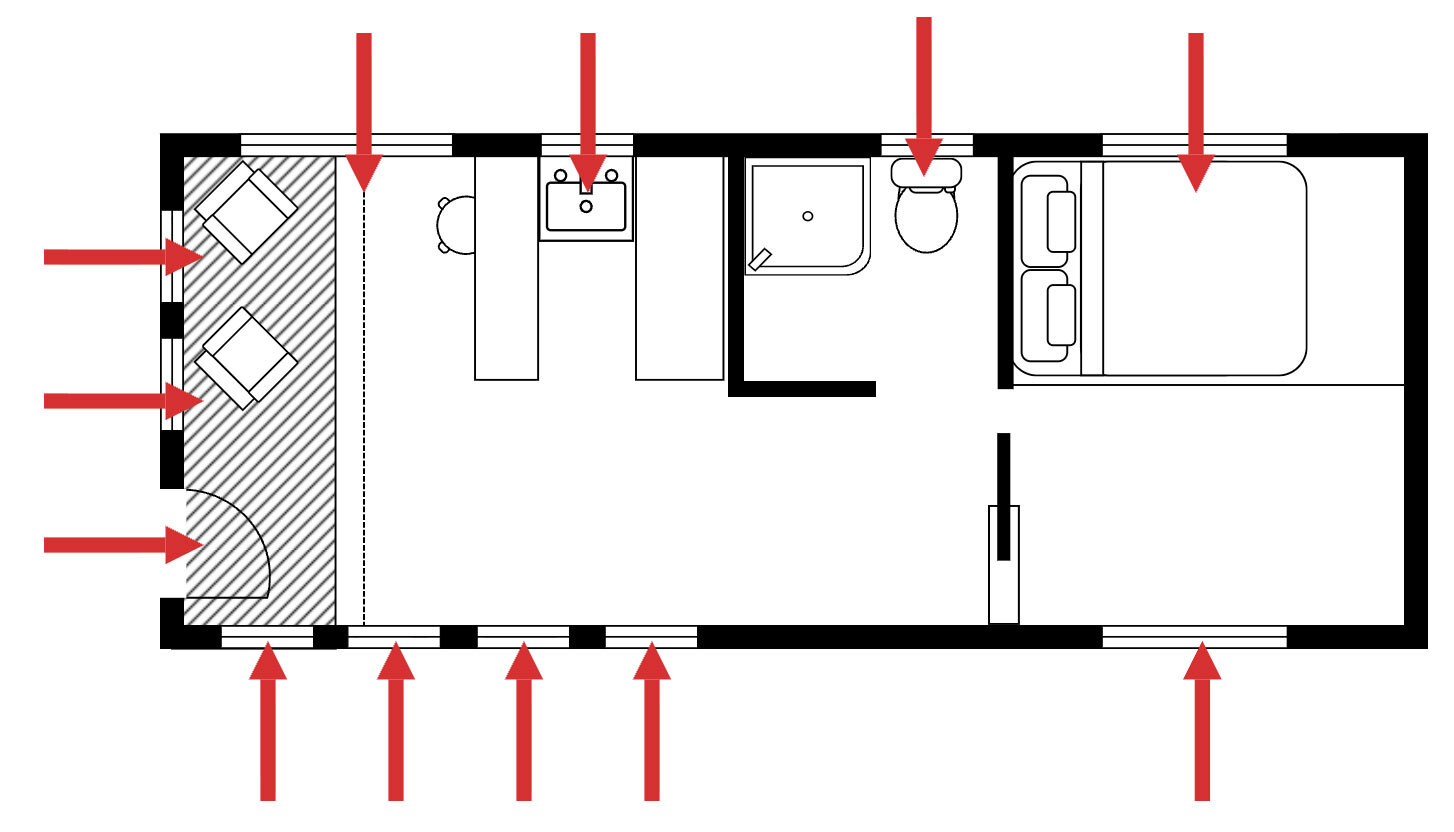
As with all things in life, a good plan will save you time and money. Thinking having a small space means you can just wing it would be a costly mistake. In fact, the smaller the space, the more you need to create a plan to make the most of it.
- Add furniture to scale so you know exactly how much space you have
- Test walking paths to ensure smooth movement
- Check door swings and clearances to avoid conflicts
- Simulate daily routines like cooking, working, and relaxing